Instructions
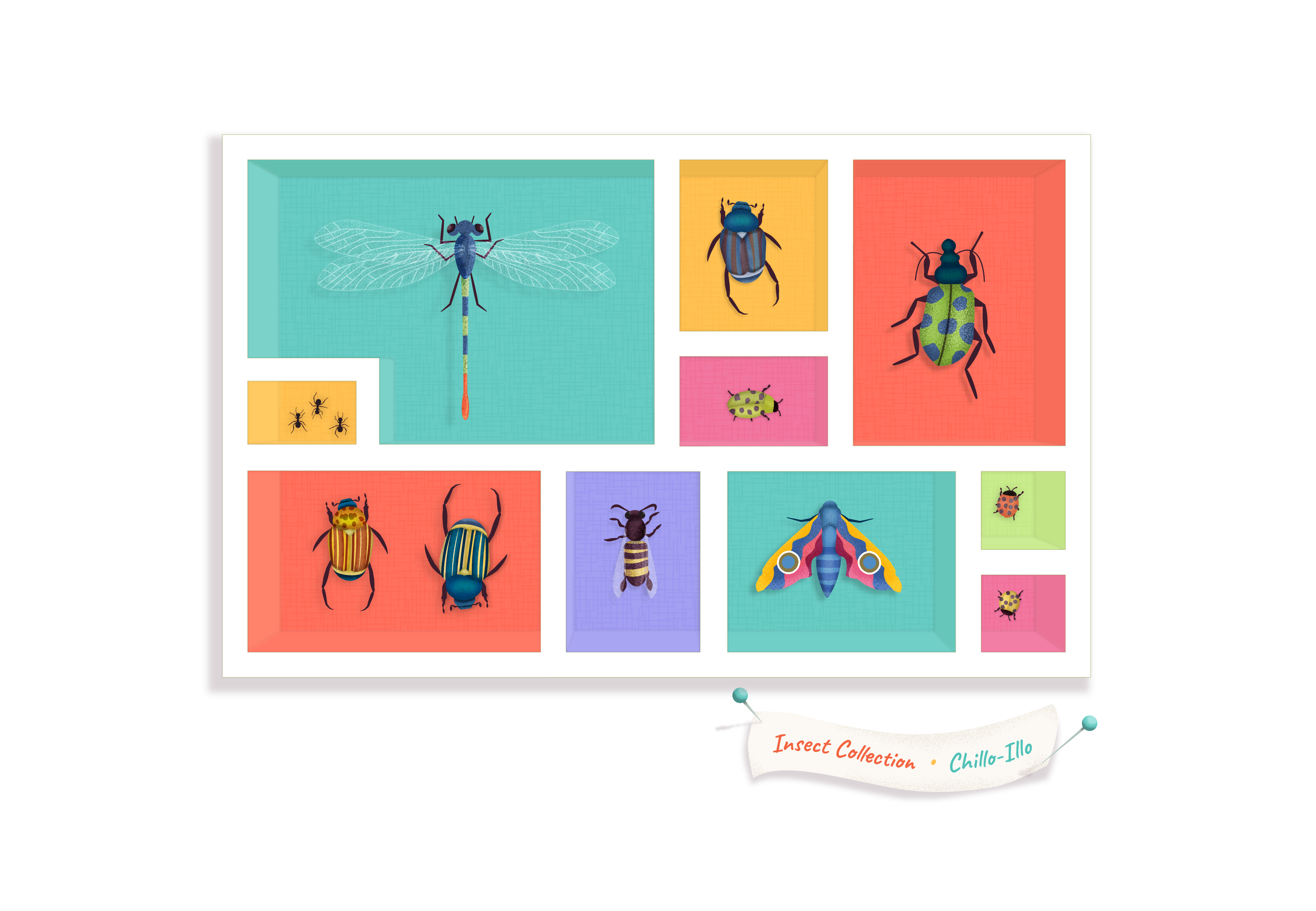
Hover the cursor over any box to shine light on the subject, or use the light switch to examine the whole collection at once.
Dragonfly
- One of the oldest insects
- Can snag prey mid-air
- Scientific order of Odonata • "toothed one" because of it's jagged jaw
- Top speed approx. 18 mph
- Almost 360° vision (one blind spot in the back)
- Lays eggs in water, nymphs live in water up to 2 years
Scarab
- Scarab is the common family name that describes 30,000 species of beetles
- Their antennae have 3 segments that form a club
- Front legs often have hooks or scoops for digging
- Many species are beautifully colored
- The Hercules beetle can reach 6 inches in length
- Dung beetles eat exactly what you think they would
Weevil
- Known for their snouts, different species have varying lengths
- Many species can destroy whole crops or grain storages
- With 45,000 species Weevils are the largest family in the animal kingdom
- Extreme weevil species include the Giraffe Weevil, the Polka Dotted Clown Weevil, and the Hose Nose Weevil
- The Boll Weevil all but wiped out the cotton industry in the United States in the 1920s
Ants
- Ants can "talk" to each other through pheromones or by exhanging bodily fluids (yup).
- Very social creatures, ants live in huge colonies headed up by a queen
- They are very strong lifting about 20 times their body weight
- Also cooperative, many will work together to lift items that are huge in comparison to their tiny bodies
- Queens have wings! They shed them after initiating a new nest
- No lungs! They breathe through tiny holes covering their bodies
Cucumber Beetle
- Also known as Southern Corn Rootworm
- They live in the US east of the Rocky Mountains and prefer the South
- Voracious like many beetles, they are a threat to cucumber, melon, soy, and corn crops
- Their less destructive cousin the ladybug is sometimes confused for these
- Eggs are laid in the soil at the roots of the host plant
Potato Beetle
- First found disrupting potato harvests in America in mid-1800s
- A beetle can lay 500 eggs in a month
- Eggs are bright yellow-orange
- Known for their resistence to pesticides
- Originally existed on a plant called Buffalo Bur until humans brought potatoe plants from South America
Wasp
- There are about 30,000 species of wasps
- Chew wood into pulp to make their paper-like nests
- There are both social and solitary species of wasps. Most species are solitary.
- Helpful in controlling pest populations
- The social species only survive one year, all die off in winter with the exception of the queen who starts a new nest in the Spring.
Moth
- There are more than 11,000 species of moths … just in the U.S.
- The largest moth has a wingspan of about 12 inches
- They don't have noses, but are expert sniffers using their antennae
- Like butterflies, moths have scales covering their wings
- You know baby moths as caterpillars
- Moths live in all habitats but polar
Ladybug
- Ladybug is a nickname for Lady Bird Beetle
- Can have spots or stripes
- Used by farmers as bio control of pests — mostly aphids
- Can emit a nasty toxin to deter being eaten
- Has 2 sets of wings, inner transparent flight wings, and harder protection wings that cover the delicate ones below
Yellow Ladybug
- Ladybugs have yellow blood
- Ladybugs are colorless or yellow when they first emerge from pupa stage and begin to develop spots
- Yellow ladybugs are simply in a stage of developing their red color
- A yellow ladybug may have a mutation to keep it yellow
- It might not be a ladybug but a spotted cucumber beetle which looks similar but has a more elongated body